
Finding a smooth, round bare patch on your scalp or a clump of hair on your pillow can be alarming. For many people, this is the first sign of alopecia areata, a common condition that causes hair to fall out in patches. It can affect anyone, at any age, and it often appears without warning. This guide explains what it is, how it changes hair growth and what options exist, so you can approach it with clear, realistic information.
What Is This Condition?
It is an autoimmune disease — the immune system attacks healthy tissue. In this case, the target is the hair follicle, the small structure in the skin from which each hair grows. The follicles do not usually die. They are pushed into a resting state, so hair may stop growing or shed. Regrowth can happen, though it does not always occur on a predictable timeline. Alopecia areata is not contagious and is not simply the result of poor hair care, hygiene or product choice.
How It Affects Hair Growth
Healthy hair cycles through a growth phase, a transition phase and a resting stage before shedding. In alopecia areata, the immune response interrupts the growth stage, so hair falls out early and new hair may not grow or grows thinly. Doctors may see short, broken hairs that narrow near the scalp — often called “exclamation mark” hairs. These are a classic sign of the condition.
Main Patterns
The condition shows up in different ways:
- Patchy: One or more round or oval bald patches, usually on the scalp.
- Total scalp loss: Hair loss across the whole scalp.
- Universal loss: Loss of hair across the entire body, including eyebrows and lashes.
- Beard involvement: Patches in the beard area in men.
- Diffuse thinning: Widespread thinning rather than distinct patches.
Some people also develop nail changes, such as tiny pits or ridges.
Possible Causes and Triggers
A single definite cause has not been identified. There may be a genetic component, and people with a family history can be at higher risk. It also occurs more often alongside other autoimmune or allergic conditions, such as thyroid disease, vitiligo or eczema. Emotional stress, illness or physical stress are often mentioned as possible triggers, but they are not the sole cause. For others, there is no obvious trigger, which can feel frustrating.
How Is It Diagnosed?
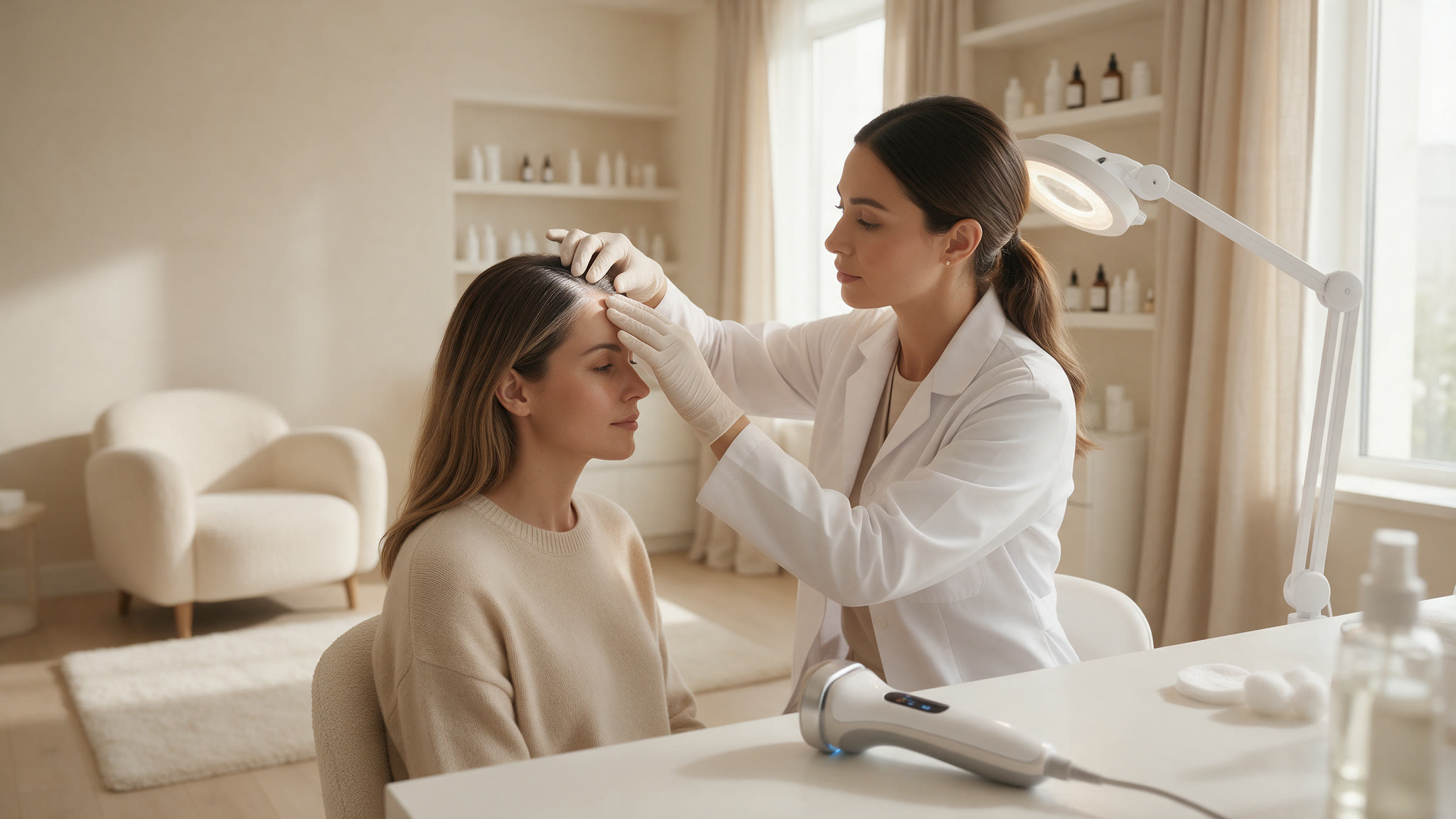
A doctor usually diagnoses alopecia areata by examining the scalp and hair. A dermatoscope can show characteristic signs, and in unclear cases a small skin sample may be taken. Blood tests may be ordered to look for related conditions. Early assessment by a qualified practitioner also helps rule out other causes of hair loss, such as fungal infection, hormonal issues or nutritional deficiency.
What to Expect Over Time
The course is unpredictable. Some people regrow hair on their own within months, others experience repeated episodes and a smaller group face more persistent loss. Patchy hair loss that appears early often has a better outlook than extensive or long-standing loss. A physician can help set expectations but cannot promise a specific outcome.
Treatment Options
There is no universal cure, but several approaches may help encourage regrowth. A suitable alopecia areata treatment plan depends on age, extent of hair loss and overall health. Options a doctor may discuss include:
- Topical or injected corticosteroids to calm local immune activity
- Minoxidil to support growth
- Topical immunotherapy for more extensive loss
- Newer prescription medicines in selected patients, where approved and appropriate
- Supportive therapies, sometimes used alongside medical care
Any alopecia areata treatment should be supervised by a qualified professional, since responses differ and some medicines carry risks.
Emotional Wellbeing
Hair loss can affect confidence and mood. Support groups, counselling and camouflage options such as wigs or brow solutions can help while treatment is underway. Emotional health is an important part of care.
Why Consider StyleAge
StyleAge offers aesthetic and hair-related services in the UAE. A consultation can help you understand your hair loss pattern and discuss options suited to your needs. If you are exploring an alopecia areata treatment approach, book a consultation to learn more and arrange an appointment. Early advice is often the best first step.
Frequently Asked Questions
1. Is the condition permanent?
Not necessarily. Hair can regrow, sometimes without treatment, but recurrence is common. Because the follicles often remain alive, there is potential for regrowth.
2. Can stress cause it?
Stress may act as a trigger in some people, but it is not considered the sole cause. Genetics and immune factors are more central.
3. When should I see a doctor?
See a physician if you notice unusual thinning, sudden patchy loss or changes to nails or brows. Prompt assessment helps clarify the cause and next steps.
Final Thoughts
Understanding this condition can reduce much of the fear around it. Get a correct diagnosis, speak with a knowledgeable professional and look after your mental and emotional health throughout the process. This article is general information and should not be relied on as medical advice.